
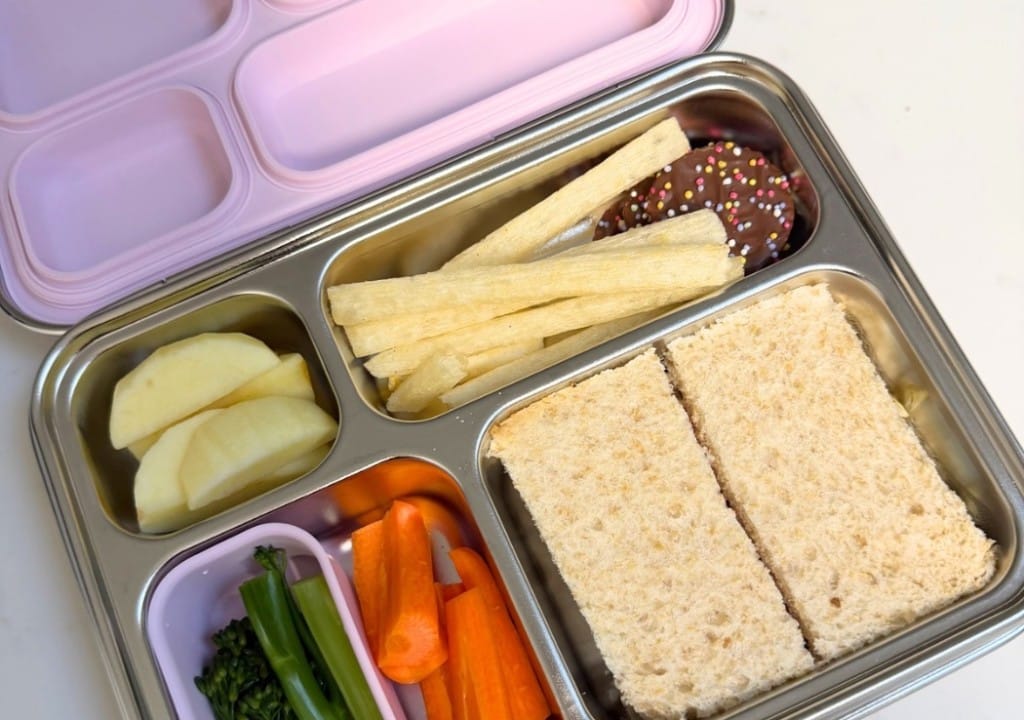
Is a Stainless Steel Lunch Box Safe for Kids? An Honest Look

If you are weighing up a stainless steel lunch box, you have probably already had the plastic doubt — the scratched, stained container that has been through the dishwasher three hundred times, and the quiet question of what exactly it is shedding into the sandwiches. Then comes the second-guess: is steel actually better for kids, or just heavier and more expensive?
Here is the honest, no-scare-tactics answer.
- Yes — food-grade 304 (18/8) stainless steel is one of the safest materials you can put a child’s food in. It is the same grade used in commercial kitchens and quality cutlery.
- Steel contains no BPA, BPS, phthalates or plasticisers — there is simply no plastic in it to leach.
- The honest caveat: children with a diagnosed nickel allergy may be better suited to ceramic or glass, and very acidic food stored for days can pick up trace metals. Neither applies to a normal school day.
- Scratches do not matter on steel the way they do on plastic — no micro-grooves shedding particles, no permanent spaghetti stains, no smell that never leaves.
- What to look for: a stated grade (304 or 18/8), a certified food-safe seal such as LFGB silicone, and a seal you can remove to clean under.
What does “304 (18/8) stainless steel” actually mean?
The numbers are the recipe: 18% chromium and 8% nickel, blended into steel. The chromium is the clever part — it forms an invisible, self-repairing layer on the surface that makes the metal “stainless” and keeps it inert against food. This is the same material family as good cutlery and the benches in commercial kitchens, which is exactly why those industries settled on it decades ago.
The catch is that “stainless steel” on a label is not one thing — grades vary, and cheaper alloys exist. A reputable kids’ brand will tell you the grade. If a listing will not say “304” or “18/8” anywhere, that silence is information too.
Does stainless steel leach anything into food?
Parent to parent: steel is not magic, it is just very good. Published research has measured tiny amounts of nickel and chromium moving into food from stainless cookware — but under conditions a lunch box never sees, like simmering acidic tomato sauce for hours on a stovetop. Even in those worst-case cooking tests, the amounts sat well within recognised dietary safety ranges.
A lunch box holds cold or room-temperature food for a few hours. No heat, no simmering, no days of contact. A sandwich, some fruit and crackers between morning tea and lunch is a non-event. The only habit worth adopting: do not store vinegary or citrus-heavy leftovers in any metal container for days in the fridge — that is what ceramic and glass containers are for.
What about kids with a nickel allergy?
This is the one genuine exception, and we would rather say it plainly than pretend steel is perfect for everyone. 304 contains nickel. For the small number of children with a diagnosed nickel allergy, it is worth a conversation with your GP — ceramic or glass may be the better call for them.
Stainless steel vs plastic lunch boxes
| 304 stainless steel | Plastic (including BPA-free) | |
|---|---|---|
| What can migrate into food | Nothing plastic-based; trace metals only under prolonged acidic cooking | “BPA-free” means one chemical is absent — replacement bisphenols and plasticisers can still migrate, more so with heat and scratches |
| Scratches | Cosmetic only | Micro-grooves that harbour bacteria and stains |
| Odours and stains | Does not hold either | Bolognese stains and smells tend to be forever |
| Lifespan | Years — dents are battle scars, not failures | Cracks, warps and clouding; often replaced yearly |
| Weight | Heavier | Lighter |
| Microwave | No | Sometimes — but heating plastic is exactly when migration increases |
| End of life | Endlessly recyclable | Mostly landfill |
And to be fair to plastic in both directions: steel is heavier in the school bag, and it can never go in a microwave. If daily reheating at school is essential for your family, steel is not your format — no lunch box is worth pretending otherwise.
What about the silicone seal?
The lid seal is the other material that touches food, and it deserves the same scrutiny as the box. Look for LFGB-certified silicone — the German Food Commodities Act standard, one of the strictest food-contact tests in the world. And check the seal is removable: if you cannot take it out, you cannot clean under it, and trapped moisture under a fixed seal is where most “mouldy lunch box” horror stories actually start.
How do you clean a stainless steel lunch box?
The short version: dishwasher, top rack, seal removed. Steel’s non-porous surface is the reason mould and smells struggle to take hold in the first place — there is nowhere for them to live. Handwashing works just as well with warm soapy water; no special products needed.
What we pack at Kaally
Everything this article describes is the exact spec we chose for the Kaally Bento 4+: a 304 (18/8) stainless steel body with four leak-proof compartments — 1059mL all up, just over a litre — a removable LFGB-certified silicone seal, and your choice of clip (easy-open for younger kids, or the secure full-metal latch). Dishwasher-safe on the top rack, BPA-free, phthalate-free and lead-free throughout — and 5-star reviewed by Aussie families.
Smaller appetites and recess-only missions are covered in our full lunch & snack range, and if a silicone straw has ever grown something suspicious in your house, our straw cleaning guide is the companion read.
Is stainless steel safe for kids’ food?
Yes — food-grade 304 (18/8) stainless steel is inert under normal use and contains no BPA, phthalates or plasticisers. It is the same grade used in commercial kitchens and quality cutlery.
Do stainless steel lunch boxes leach chemicals?
There are no plastic chemicals in steel to leach. Research has only measured trace metal transfer during prolonged cooking of acidic foods — conditions a lunch box holding cold food for a few hours never sees.
Are stainless steel lunch boxes worth the money?
They typically outlast several plastic replacements, do not stain or hold odours, and are fully recyclable at end of life. The upfront cost is higher; the cost per year of use is usually lower.
Can a stainless steel lunch box go in the dishwasher?
Quality ones, yes. The Kaally Bento 4+ is dishwasher-safe on the top rack, with the silicone seal removed so everything cleans properly.
What should I look for when buying a stainless steel lunch box?
A stated steel grade (304 or 18/8), a certified food-contact seal such as LFGB silicone, genuinely leak-proof compartments, and a removable seal you can clean under.
Is stainless steel better than BPA-free plastic?
BPA-free only means that one chemical is absent — replacement plasticisers can still migrate, especially with heat and scratches. Steel has nothing plastic-based to migrate in the first place.