
Why Are My Silicone Straws Slimy? Causes and a Low-Tox Fix

Silicone straws go slimy because of biofilm: a thin, sticky layer of everyday bacteria and yeast that grows on any surface that stays damp. It can start within a day, even if you only use filtered water, and rinsing won’t shift it. Brushing, a weekly soak, a 5-minute boil and drying the straw fully will.
If your silicone straws are slimy even though you only use filtered water, you’re probably wondering “but it’s only water, what’s even growing?” That’s the right question. The answer is a bit counter-intuitive, and the fix is simple and low-tox.
Quick answer: why are my silicone straws slimy?
- It’s almost always biofilm. Bacteria stick to damp surfaces and wrap themselves in a slippery protective layer.
- Filtered water doesn’t prevent it. Carbon filters remove chlorine, which is what normally keeps bacteria in check, and old or unflushed filters can add bacteria of their own.
- Rinsing doesn’t remove it. Scrubbing does. A brush through the full length of the straw is the single biggest fix.
- Low-tox fix: warm soapy water and a brush, a weekly baking soda or 3% hydrogen peroxide soak, boil for 5 minutes, then dry upright.
- It’s not a faulty straw. Silicone is a safe, durable material. A narrow, damp tube is simply the ideal home for microbes.
What is the slime on a silicone straw?
The slime is a biofilm. When bacteria and yeast land on a wet surface, they attach themselves and produce a slippery matrix that protects them. Once it’s established it clings on, and a quick rinse just flows over the top.
A straw is close to the perfect spot: it’s narrow, it stays damp for hours, and every sip can leave behind saliva and traces of drink. Food-safety guidance is consistent on this point: biofilm has to be physically scrubbed off before a sanitiser can work properly, which is why brushing matters more than any product you soak a straw in.
Why do straws get slimy even with filtered water?
Filtered water feels like the cleanest option, but it isn’t a guarantee against slime. Tap water carries a small chlorine residual that suppresses bacterial growth. Activated carbon filters are very good at removing chlorine (that’s the point of them), which also leaves the water with less built-in protection.
Filters can also become part of the problem. In one study of household point-of-use filters in Iran, the filtered water averaged around 2,400 bacterial colony-forming units per mL, compared with about 230 in the tap water going in. The researchers put it down to chlorine removal, bacteria colonising the filter and water sitting still. CHOICE also warns that spent filter cartridges can themselves harbour microorganisms.
The bacteria most often found in drinking-water biofilms (such as Pseudomonas and Sphingomonas) are well known for growing in very low-nutrient conditions. They don’t need much to get going.
My straws never used to be slimy. What changed?
If slime appeared out of nowhere, something changed. In rough order of likelihood:
- A new or different water filter. New cartridges usually need flushing before first use, and a new cartridge dropped into a jug, housing or tap spout that already has a biofilm simply gets re-seeded. Some filters also strip chlorine more completely than others, or add minerals that leave a film.
- Water that sits. Fill straws and bottles fresh from the filter and tip out water that has stood for days.
- Warmer weather. Bacteria grow faster as it heats up, so a routine that was fine in winter can tip over in spring.
- A new dish soap, rinse aid or dishwasher detergent. Some leave a film that feels slimy.
- A change in your local water supply. Suppliers occasionally adjust treatment, so check your provider’s notices.
The quickest way to find your cause: use the same freshly cleaned straw with unfiltered tap water for two days. If it stays clean, the filter or its water is the likely culprit. You can also dry one straw fully overnight and leave another sitting in a closed bottle. Whichever goes slimy tells you whether it’s the water or the storage.
Silicone straws slimy, greasy or chalky? How to tell the cause
| What you notice | Most likely cause | What to do |
|---|---|---|
| Slime returns within a day of a proper scrub | Biofilm from water, saliva or damp storage | Brush, soak, boil, dry fully |
| Slippery or greasy straight after washing | Dish soap or soap-and-hard-water film | Rinse thoroughly, soak in baking soda |
| Chalky white or cloudy film | Hard-water minerals | Soak in white vinegar or citric acid |
| Brand-new straw feels oily | Surface residue from manufacture (possible) | Wash, then boil for 5 minutes before first use |
| Only the straw left in the bottle | Damp, enclosed storage | Store separately, upright, fully dry |
How do you get the slime out of silicone straws?
- Brush it. Use warm water, a drop of plain dish soap and a straw brush that reaches the whole length. Push it through several times, then rinse well so no soap film is left.
- Soak it. Pick one: a tablespoon of baking soda in a cup of warm water for 30 minutes (good for greasy or soapy film), or 3% pharmacy-strength hydrogen peroxide for 5 to 10 minutes, then a thorough rinse. It breaks down into water and oxygen and leaves no residue. For chalky mineral film, use white vinegar or citric acid instead. Don’t mix products in the same container, and never combine vinegar with peroxide.
- Boil it. Five minutes in a pot of boiling water is the standard Australian guidance for sterilising feeding equipment, and food-grade silicone handles it well. Check your straw’s care instructions first. A dishwasher on its own isn’t considered sterilising for baby equipment.
- Dry it completely. Shake it out and stand it upright in open air until it’s bone dry. Moisture is what the slime needs.
For more detail on everyday care, see our guide to how to clean silicone straws.
How do you stop silicone straws going slimy again?
- Brush after every use, not just when they look dirty. The film is invisible long before it’s slimy.
- Deep clean weekly with a soak, and boil when you want a full reset.
- Keep a spare so one straw is always drying while the other is in use.
- Don’t store straws in a closed bottle or lid. Pull them out and let them dry.
- Use fresh water, and keep filter jugs, housings and spouts clean. Replace cartridges on the maker’s schedule.
- Take it apart after anything other than water. Milk, juice and smoothies leave sugars and proteins that microbes love.
- Replace straws that look discoloured or thin, or smell after a proper clean.
Is a slimy straw harmful?
Usually the slime is common environmental bacteria and mostly a nuisance, but it isn’t something to keep drinking through. The bacteria found in household filter studies were mostly opportunistic ones, which are of most concern for people with weakened immune systems. If anyone in your household is immunocompromised, be extra thorough, and if a child is unwell, speak to your GP. This article is general information, not medical advice.
What not to use
Skip bleach and strong disinfectants on anything that goes in a mouth. You don’t need them, since the brush does the heavy lifting, and the gentler options above are enough. Avoid abrasive scourers too, because scratches give microbes more places to hide.
Straws and brushes built to be cleaned
Every Kaally and KaaKaaBaby straw is made from LFGB-certified food-grade silicone, and the lids and straws come apart so each part can be brushed and dried. That’s the whole point: nowhere for slime to hide.
- For babies and toddlers: the KaaKaaBaby Glass Bottle with Silicone Straw and Sleeve has a straw that lifts straight out, and is backed by our 90-Day Drop Guarantee.
- For school-age kids and adults: the Kaally Bottle Silicone Lid & Straw Set fits our 500mL and 800mL borosilicate glass bottles, which are covered by our 30-Day Drop Guarantee.
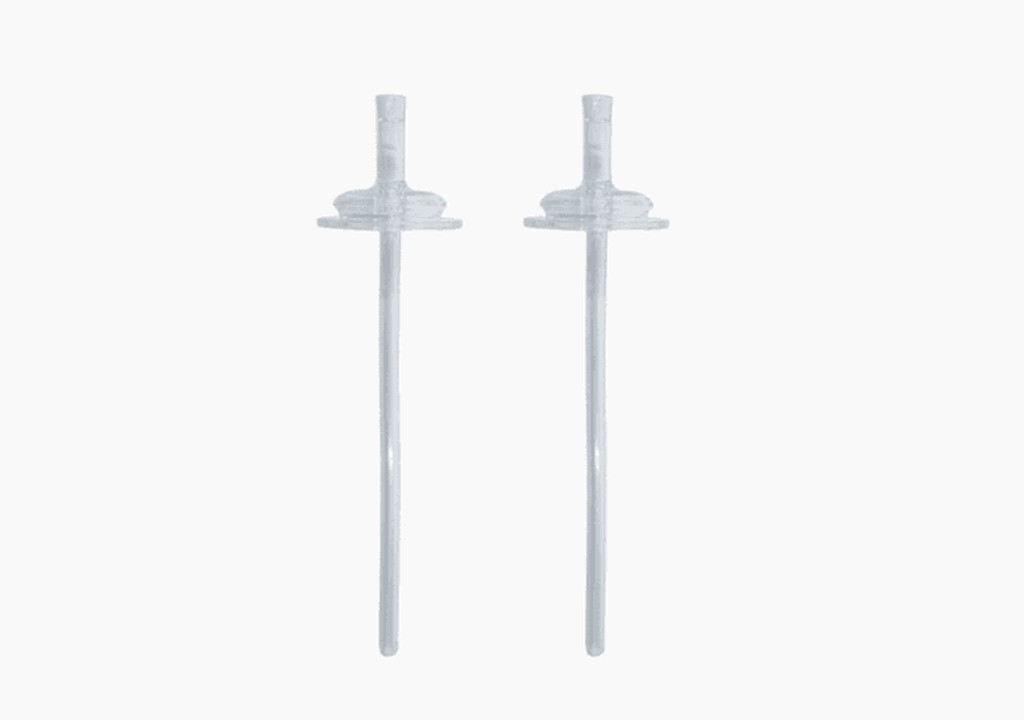
- Keep a spare in rotation: Replacement Straws (Set of 2).
- Get the right brush: the Silicone Straw Cleaning Brush or Nylon Wire Straw Cleaning Brush, in sizes to suit KaaKaaBaby and Kaally straws.
Last updated 29 October 2026. Sources: bacterial regrowth in household water filters (PMC); CHOICE, water filters; low-nutrient household biofilms (PMC); Raising Children Network, bottle-feeding equipment; Pregnancy, Birth and Baby, sterilising; Food Safety Magazine, biofilms and sanitation.
Frequently asked questions
Why are my silicone straws slimy after one day?
Most likely a biofilm of everyday bacteria and yeast building up on a damp surface. Narrow straws trap moisture and drink residue, so it can start within about a day.
Why does filtered water make straws slimy?
Carbon filters remove the chlorine that normally holds bacterial growth back, and old or poorly flushed filters and standing water can add bacteria. Filtered water can still grow biofilm.
How do you get slime out of silicone straws?
Brush with warm soapy water, soak in baking soda or 3% hydrogen peroxide, rinse well, boil for 5 minutes, and dry upright and fully.
Is the slime on a straw harmful?
Usually everyday environmental bacteria and mostly a nuisance, but don’t keep drinking through it. Be extra careful if anyone is immunocompromised, and see a GP if a child is unwell.
Can you boil silicone straws?
Yes. Food-grade silicone handles boiling for 5 minutes. Check the care instructions first.
How often should I clean silicone straws?
Brush after every use, deep clean weekly, and replace them when discoloured, thinning or smelly after a proper clean.